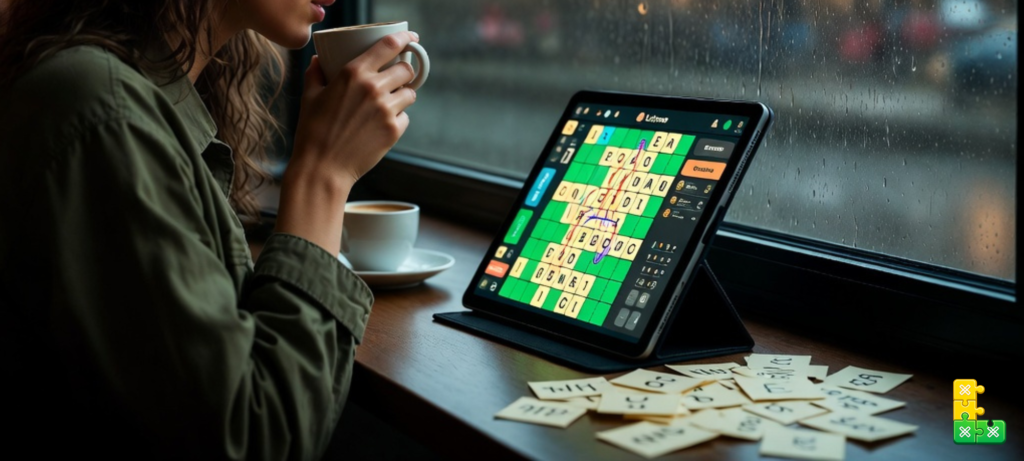

If you have spent any time at all playing word puzzles online, you know that specific kind of frustration when you are stuck on one single letter for way too long. Letroso is a bit of a different beast because it doesn’t just test how many words you know. It actually forces you to think about how words are built and how letters connect to each other. Unlike the more basic games that only use green or yellow colors, Letroso gives you a lot of visual data that can either be your best friend or leave you totally confused if you don’t know what to look for.
To really get good at this, you have to stop just guessing random words and hoping for the best. You need a real plan. This guide is going to break down the most effective ways to speed up your solving time. Whether you are doing the daily puzzle or just messing around in the unlimited mode, these tips will help you spot the patterns much faster.
If you are still trying to figure out the basics, it might be worth checking out our full How to Play Letroso guide first. But if you’re ready to level up, let’s get into the tactics.
Table of Contents
- Starting with the Right Words
- Reading the Grid Beyond the Colors
- Comparing Strategy Approaches
- The Art of Elimination
- Spotting Common Letter Clusters
- Mental Tricks for Faster Solving
- Why Brain Games Actually Matter
- Frequently Asked Questions (FAQs)
- Final Thoughts
Starting with the Right Words
In a game like Letroso, your very first move sets the tone for the whole session. Since you can guess as many times as you want, some people think the first word doesn’t matter. That is a mistake. A weak first word gives you zero helpful data, while a smart one can basically finish half the puzzle for you.
The trick is to use “high-frequency” letters. These are the letters that show up most often in English. You want a word that has at least three vowels and two solid consonants.
Try using these as your openers:
- ARISE: This covers A, I, and E, plus R and S. It’s a classic for a reason.
- OATEN: This is great for hitting the O and A vowels along with the common N.
- STARE: If you want to test the very common S-T combination, this is your best bet.
By starting this way, you are narrowing things down right out of the gate. Even if all the letters turn grey, that is still good information because you now know exactly what letters to stop worrying about.
Reading the Grid Beyond the Colors
The real “pro” secret to solving Letroso faster than everyone else is paying attention to the visual clues. Most players just look at the colors and call it a day. If you want to be fast, you have to look at the lines and the shapes of the boxes themselves.
The Connection Lines
When you see a line linking two boxes together, those letters are “neighbors.” This is huge. If you see a connection between two slots, you know those letters have to stay side-by-side. This stops you from wasting guesses on words where those letters are separated.
The Border Shapes
Keep an eye on the edges of the tiles. When a tile becomes rounded or looks “thicker” on the screen, it usually means that letter is locked into its final home. Once you see that, stop messing with that slot. Focus all your energy on the empty boxes that are still square.
Comparing Strategy Approaches
| Strategy Type | What to Focus On | Best Time to Use | Speed Boost |
| Vowel Hunting | Finding A, E, I, O, U | Right at the start | Very High |
| Letter Scrapping | Eliminating grey letters | After the first guess | Medium |
| Link Logic | Using connection lines | When you have 2+ letters | High |
| Ending Checks | Looking for -ING or -ED | For longer words | High |
The Art of Elimination
As you get more letters on the board, you need to start using deduction. This is basically just the process of ruling out what is impossible. If you have a five-letter word that ends in “RE,” and you know the letters ‘S’, ‘T’, ‘P’, and ‘C’ are definitely not in the word, your list of options gets very small very quickly.
Instead of scrolling through every “RE” word in your head, you only have to think about things like “GLARE” or “FLARE.” This mental shortcut saves a ton of time.
Spotting Common Letter Clusters
Speed comes from seeing words in “chunks” rather than one letter at a time. Our brains are naturally good at spotting patterns if we train them. According to linguistics data you can find on Wikipedia’s Phonotactics entry, certain letters almost always travel in packs.
For example, if you find a ‘G’ at the end of a word, you should immediately look for an ‘N’ and an ‘I’ right before it. If you see a ‘C’, there is a high chance an ‘H’ or a ‘K’ is nearby. When you think in these clusters, you are essentially solving three letters at once instead of just one.
Mental Tricks for Faster Solving
There is a big psychological side to this. Have you ever noticed how you get stuck on the same two or three words and can’t think of anything else? That’s called a mental loop.
To break it, literally look away from your phone or computer for a few seconds. When you look back, try reading the grid from right to left. It sounds silly, but it forces your brain to see the letters as a new puzzle rather than the same old problem you were struggling with.
As researchers at Harvard Health point out, these kinds of puzzles are great for “cognitive plasticity.” They keep your brain flexible and help you process new information more efficiently, which is a fancy way of saying they keep you sharp.
Why Brain Games Actually Matter
Playing Letroso is a fun way to kill time, but it’s actually doing some good for your head too. It builds up your vocabulary and helps with your overall logic skills.
When you are constantly testing different patterns and responding to feedback, you are training your brain to handle complex problems in a structured way. This kind of “active thinking” is a lot better for your focus than just mindlessly scrolling through a social media feed.
Frequently Asked Questions (FAQs)
What’s a good word for a 7-letter puzzle?
I usually go with something like “ROASTED” or “PRINTER.” They use a lot of common letters and vowels that help clear the board quickly.
What do the lines between boxes mean?
Those lines mean those two letters are connected in the final word. They are neighbors!
Can letters be used more than once?
Definitely. If you are stuck, remember that words like “BEE” or “LEVEL” use the same letter multiple times.
Is there a time limit?
Nope. You can take as long as you want. The “fast” part is just for people who like to challenge themselves or compete with friends.
Where can I play this?
The best place to go is Letroso. It’s free and works on pretty much any device.
Final Thoughts
Mastering Letroso is really just about learning to speak the game’s language. Once you stop looking at it as a vocabulary test and start seeing it as a logic puzzle, you will get much faster. Use those high-value starting words, pay close attention to the connections on the grid, and don’t be afraid to use a “throwaway” guess just to eliminate some letters.
The more you play, the more these patterns will become second nature to you. So, head over to Letroso and give today’s puzzle a shot. See if you can use these tricks to solve it in half the time it took you yesterday!