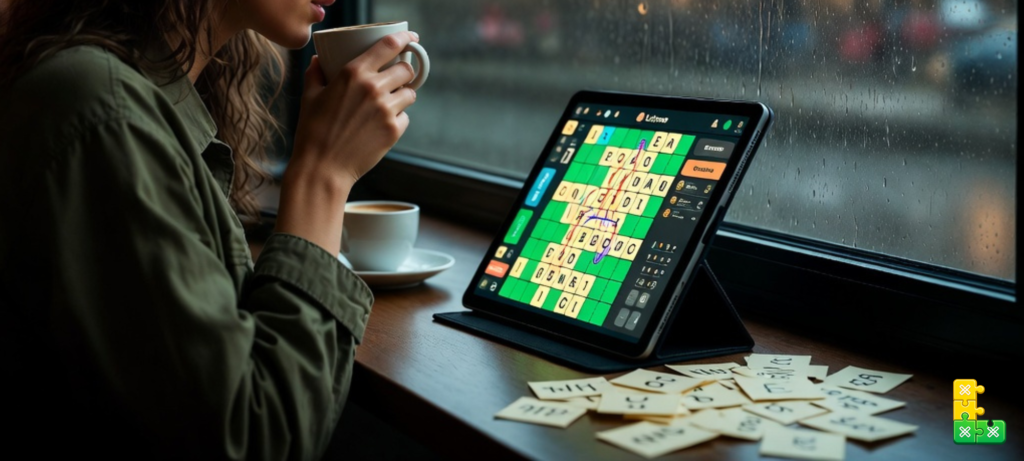

The landscape of digital word games is constantly changing. For a long time, players were satisfied with simple grids and limited attempts. However, as our appetite for mental challenges grows, so does the complexity of the puzzles we play. Enter Letroso, a game that has taken the internet by storm by offering a deeper, more logical twist on the classic word-guessing formula.
If you have just discovered this game, you might feel a bit lost. The interface is clean, but the clues are more sophisticated than what you find in standard word puzzles. This guide is designed to walk you through every aspect of the game. We will cover the basic rules, the unique visual language of the grid, and the advanced strategies used by top players to solve puzzles in record time.
To see the game in action as you read, you can open a session at Letroso.
Table of Contents
- What Exactly is Letroso?
- The Core Rules: How the Game Functions
- Decoding the Visual Language: Colors and Shapes
- Why Letroso is Different: A Comparison Table
- A Detailed Step-by-Step Gameplay Walkthrough
- Beginner Strategies for Efficient Solving
- The Cognitive Benefits of Daily Puzzles
- Advanced Patterns to Look For
- Common Mistakes and How to Avoid Them
- Frequently Asked Questions (FAQs)
- Final Thoughts and Next Steps
What Exactly is Letroso?
At its heart, Letroso is a web-based word deduction game. While many games focus purely on how many words you know, Letroso focuses on how well you can recognize patterns. It is a browser-based experience, meaning there is nothing to download. It is built for the modern player who wants a quick mental workout during a commute or a coffee break.
The most striking feature of the game is its flexibility. The hidden word is not always five letters long. One day you might be hunting for a three-letter word, and the next, you could be staring at a ten-letter giant. This variety keeps the game from feeling repetitive and ensures that your brain never gets too comfortable.
The Core Rules: How the Game Functions
The mechanics of Letroso are built to be intuitive but layered. When you enter a word into the grid, the game analyzes it against the secret target word. The feedback you receive is instantaneous and highly detailed.
The first thing to understand is that you have unlimited guesses. This is a massive departure from the “six tries and you’re out” philosophy of other games. In Letroso, the goal isn’t just to win; it’s to solve the puzzle using logic and deduction. Every guess you make provides a new set of data points that help you narrow down the possibilities.
The game also uses a dynamic grid. As you type, the boxes may shift or change appearance based on the length of the word and the specific clues revealed. This interactive element makes the puzzle feel alive and responsive to your input.
Decoding the Visual Language: Colors and Shapes
Most beginners focus only on the colors, but the shapes and connections in Letroso are where the real secrets lie. To play at a high level, you must learn to read the entire board.
The Color System
- Green: This is your “home run.” A green tile means the letter is perfectly placed.
- Yellow: This is a “maybe.” The letter is in the word, but it belongs in a different slot.
- Grey: This is an “exclusion.” The letter does not exist in the word at all.
The Shape Language
In Letroso, a tile might change its border. If a tile becomes rounded or “fixed,” it serves as a visual anchor. This signifies that the letter is locked in place. Unlike standard games where you just remember the green spots, Letroso physically changes the grid to help you visualize the remaining empty spaces.
The Connection Lines
Perhaps the most unique feature is the connection system. Sometimes, you will see a line or a physical link between two tiles. This tells you that those two letters are adjacent in the final word. If you find a connection between an ‘O’ and an ‘U’, you can stop trying words where those letters are separated by other characters.
Why Letroso is Different: A Comparison Table
To help you understand the value of this game, let’s look at how it compares to the traditional “Wordle-style” experience.
| Feature | Standard Word Puzzles | Letroso |
| Guess Count | Usually 6 | Unlimited |
| Word Length | Fixed (5 letters) | Dynamic (3-10 letters) |
| Visual Indicators | Color Only | Color + Shape + Connections |
| Stress Level | High (Fear of losing) | Low (Focus on solving) |
| Logic Required | Moderate | High |
| Replayability | Once per day | Daily + Practice modes |
A Detailed Step-by-Step Gameplay Walkthrough
Let’s look at how a typical session might go for a new player.
1. The Opening Move: You start with a blank grid. You type in “ARISE.” The game processes it. You get a yellow ‘R’ and a green ‘E’ at the end. The ‘A’, ‘I’, and ‘S’ turn grey.
2. The Second Probe: Now you know ‘E’ is the last letter. You also know ‘R’ is somewhere else. You decide to test more common consonants. You type “POWER.” The ‘P’, ‘O’, and ‘W’ are grey. But the ‘R’ turns green right before the ‘E’. Now you have “—RE.”
3. Using Visual Clues: You notice a connection line between the second and third boxes. This means those two letters are a pair. You think of words ending in “RE” that have a common middle pair. You try “SHARE.” The ‘S’ and ‘H’ are grey.
4. The Final Deduction: You realize the word must be simpler. You try “FLARE.” Every box turns green and the rounded edges lock in. You’ve solved it.
Beginner Strategies for Efficient Solving
To get better at Letroso, you need to change how you think about guessing.
- Eliminate Early: Your first two guesses should be used to “kill” as many letters as possible. Don’t worry about finding the word yet. Just find out which letters are NOT in the word.
- The Vowel Hunt: If you are stuck with a bunch of consonants, spend a turn typing a word like “ADIEU” or “AUDIO.” Knowing the vowels is like having a map of the word.
- Trust the Connections: If the game shows a connection, use it. Do not fight the logic. If two letters are linked, they stay together until the end.
- Work Backwards: Sometimes it is easier to figure out how a word ends (like -ING, -ED, or -LY) than how it starts. If you find the suffix, the rest of the word often falls into place.
The Cognitive Benefits of Daily Puzzles
Engaging with word games like Letroso is more than just a hobby; it is exercise for your brain. By constantly searching for patterns and recall, you are strengthening your neural pathways.
According to the extensive documentation on Wikipedia’s Word Game entry, these activities have been used for centuries to improve literacy and problem-solving skills. They require a mix of memory, linguistics, and spatial reasoning.
Furthermore, health experts suggest that puzzles can have a protective effect on the mind. As noted in studies shared by Harvard Health regarding cognitive power, regularly challenging your brain with new types of logic—like the visual clues in Letroso—can help maintain mental agility. It keeps your brain flexible and ready to handle complex tasks in your daily life.
Advanced Patterns to Look For
Once you have mastered the basics, you will start to see “ghost patterns.” These are common letter combinations that appear frequently in the English language.
For example, if you have a green ‘Q’, you almost certainly have a ‘U’ next to it. If you have a green ‘C’ at the end of a word, it is very likely preceded by a ‘K’. Letroso’s connection lines will often confirm these suspicions for you, but being aware of them beforehand will make you much faster.
Also, pay attention to word rhythm. A seven-letter word usually has two or three vowels. If you only have one, you know you need to search for more “vocal” letters immediately.
Common Mistakes and How to Avoid Them
Even experienced players make mistakes. Here are the most common ones:
- Reusing Grey Letters: It is easy to forget that ‘T’ was grey in your first guess and use it again in your third. Always look at the “used” letter list if the game provides one.
- Ignoring the Grid Shapes: If a box is rounded, it is fixed. Don’t waste time trying to put a different letter there.
- Overcomplicating: Usually, the hidden word is a common, everyday term. Don’t go looking for obscure scientific jargon unless you are completely out of options.
Frequently Asked Questions (FAQs)
What makes Letroso harder than other games?
The variable word length. Not knowing if you are looking for five letters or eight letters adds a layer of mystery that fixed-length games don’t have.
Where is the best place to play?
You can find the official version and all its features at Letroso.
Can children play Letroso?
Yes. Since there are unlimited guesses, it is actually a great way for kids to learn new words and practice logic without the frustration of losing.
How often does the puzzle change?
There is a new “Daily Puzzle” every 24 hours, but many sites offer an “Unlimited Mode” where you can play as many games as you want back-to-back.
Is there a strategy for the very first word?
Most experts suggest a word with at least three vowels and common consonants like R, S, or T. “ARISE,” “STARE,” and “OATEN” are excellent openers.
Final Thoughts and Next Steps
Letroso is more than just a trend; it is a smarter way to play word games. By combining visual logic with traditional vocabulary skills, it offers a deep and satisfying experience. The best part is that you can get better every single day just by paying attention to the clues the game gives you.
Whether you want to challenge your friends or just keep your mind sharp during a break, this game is the perfect tool. The unlimited format means you can relax and enjoy the process of discovery.
Ready to see how your logic stacks up? Head over to Letroso and start your first puzzle. Once you solve a few, you’ll see exactly why so many people have made it their go-to daily brain exercise.