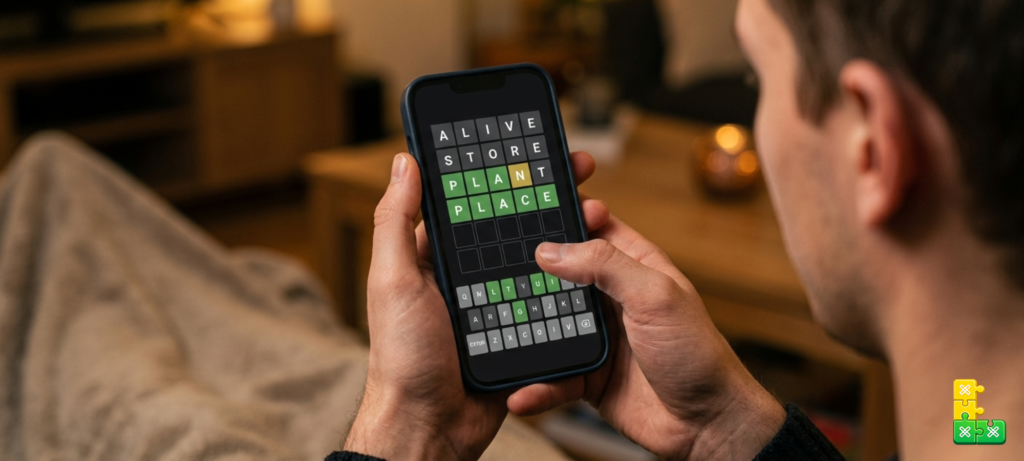
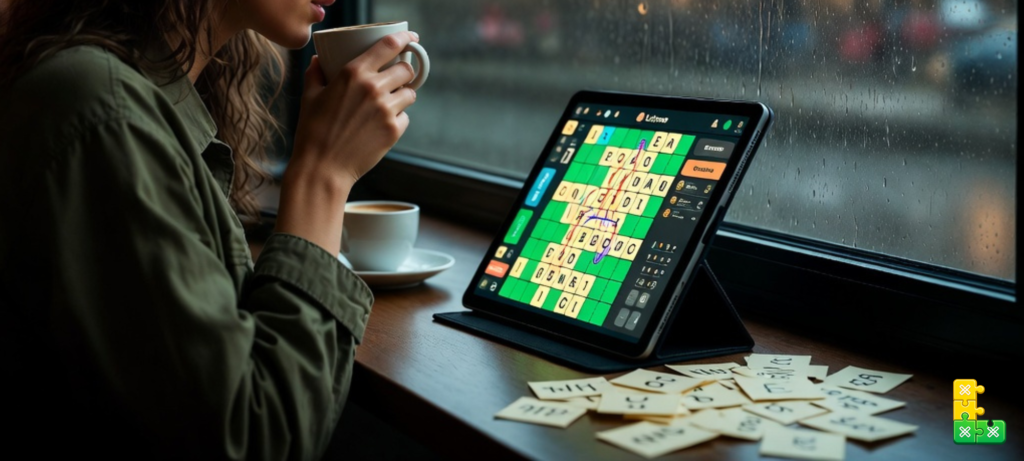
Every Letroso player eventually hits the same wall. You have been at it for ten guesses. You know four letters and roughly where they sit. But that final piece refuses to come together and the board is starting to look like a tangle of yellow tiles. You want help — but you do not want the answer handed to you. You want just enough to get unstuck.
This guide explains how to find today’s Letroso hints and answer information in a way that keeps the puzzle satisfying, how the daily answer page works, when to use external hints versus when to push through on your own, and how to read the game’s built-in clues more effectively so you need outside help less often.
Table of Contents
- How the Letroso Daily Answer System Works
- Where to Find Today’s Letroso Hints
- How to Use Hints Without Spoiling the Puzzle
- Reading the Board — The Hints You Already Have
- When You Should Just Check the Answer
- Understanding the Archive — Past Letroso Answers
- How to Use Past Answers to Improve
- Frequently Asked Questions
- Final Thoughts
How the Letroso Daily Answer System Works
Letroso resets every day at midnight. A new hidden word is selected and everyone worldwide gets the same puzzle for the next twenty-four hours. When the clock hits midnight the following night, that word is locked permanently and a fresh one takes its place.
There is no official answer page within the game itself. The game gives you unlimited guesses and provides feedback after each one — but it never tells you the answer until you find it yourself, or until you hit Give Up, at which point the word is revealed and your streak resets.
External hints pages — like the daily Letroso hints and answer page — fill the gap between “I need help” and “just tell me the answer.” These pages update daily with word length, first letter, vowel count, category clues, and a final spoiler-protected reveal for anyone who has completely given up.
The key design of a good hints page is the layered approach. You get progressively more specific information as you scroll through the hints, so you can stop at exactly the level of assistance you need without accidentally seeing more than that.
Where to Find Today’s Letroso Hints
The most direct source of daily Letroso hints is the hints page at letroso.org/letroso-answer-today/. This page updates every day with:
Word length — how many letters are in today’s hidden word. This alone is more useful than it sounds. Knowing whether you are dealing with a five-letter or seven-letter word changes your entire approach before you make a single guess.
First letter — which letter the word starts with. Combined with word length, this narrows the field substantially. Most players can reduce their remaining guesses by three or four just from knowing the starting letter.
Vowel information — how many vowels the word contains and approximately where they sit. Single-vowel words need a completely different approach than three-vowel words.
Category hint — whether the word is a noun, verb, adjective, or adverb, and what general semantic category it falls into. Knowing it is a household object versus knowing it is an action word immediately shapes which words come to mind.
Final nudge — a specific letter or structural clue that resolves the last remaining uncertainty without revealing the full answer.
Full answer reveal — the actual word, visible only if you choose to scroll to it. The page is designed so the answer is not visible until you deliberately seek it out.
How to Use Hints Without Spoiling the Puzzle
This is the part most players get wrong. The temptation when you are stuck is to read all the hints at once before going back to the game. This approach consistently makes the puzzle feel unsatisfying — you receive the answer rather than finding it.
The right approach is sequential. Read the word length hint. Go back to the game and make one or two more guesses using only that information. If those guesses still do not crack it, come back and read the first letter hint. Go back to the game. Make another guess. Continue this loop — one hint, one or two guesses, back to the page if still stuck.
Most players who use this approach find they only need two or three hints to finish the puzzle, and the solving experience still feels earned. You worked through the puzzle with targeted assistance rather than having it handed to you.
If you are going to use power-ups alongside external hints, use them in the same sequential way. One piece of information at a time. The puzzle is most satisfying when you feel like you solved it, even if solving it required some help.
Reading the Board — The Hints You Already Have
Before you visit any external hints page, it is worth checking whether you have missed information the game itself has already given you. Most players consistently underuse the board’s built-in clues.
Green tiles are the easiest to process — a locked letter in a confirmed position. But are you using them fully? Green tiles do not just tell you where that letter is. They also constrain where the remaining letters can be. A green R in position two, combined with a yellow E from your previous guess, tells you the E cannot be in position two — and combined with the word length, probably narrows its position to two or three remaining options.
Yellow tiles contain two pieces of information, not one. Most players only use the first: the letter is in the word. The second piece is equally important: the letter is not in the position where you placed it. If E appeared yellow in position three, the E is definitely somewhere in the word, and it is definitely not in position three. Both facts matter for your next guess.
Connection lines between tiles are where the most information gets missed. After each guess is revealed, look for thin lines connecting adjacent tiles. A connection line means those two letters are next to each other in the final answer. If you see a connection between the R and the E in your guess, the hidden word contains RE as a consecutive pair somewhere. This eliminates a massive number of candidates in one observation.
If you read all of these clues carefully after every guess and still cannot progress, that is the right moment for an external hint. You have extracted everything the board offers — now you genuinely need new information.
For a complete walkthrough of the board feedback system, the How to Play Letroso beginner guide covers every element in detail.
When You Should Just Check the Answer
Sometimes you have been staring at a puzzle for fifteen minutes. You have made twelve guesses. Your brain is just not connecting the remaining information to a specific word. The satisfaction of solving it is gone — it has been replaced by frustration.
In this situation, checking the answer is the right call. The purpose of the daily puzzle is enjoyment and skill development — not suffering. If the puzzle is no longer enjoyable, looking up the answer and learning what the word was is more valuable than continuing to guess randomly.
What matters is what you do with the answer once you see it. Spend thirty seconds thinking about which clue you missed that would have led you there. Was it a connection line you ignored? A yellow tile you forgot to reposition? A word category you did not consider? The lesson from a difficult puzzle is more valuable than the streak point, because the lesson transfers to future puzzles and the streak does not.
The best strategies to solve Letroso faster guide includes specific advice on what to do when a puzzle feels genuinely unsolvable — including how to diagnose which type of clue you are most often missing.
Understanding the Archive — Past Letroso Answers
The daily hints page keeps a rolling archive of recent Letroso answers. This section is more useful than it might initially appear.
Tracking past answers reveals patterns in the kinds of words Letroso selects. Certain word categories appear more often than others. Certain word lengths cluster in runs. Certain letter combinations appear frequently across different words. Players who pay attention to these patterns develop a more refined intuition for what the answer is likely to be, which translates directly to faster solving.
The archive also serves a practical purpose for players who missed a day. If you want to know what yesterday’s word was — whether out of curiosity or to understand a streak reset — the archive provides that information without requiring you to play a puzzle that no longer exists.
Past answers referenced by sites like Beebom and other word game trackers confirm recent answers including FRESH (May 14, 2026) and DEEPLY (May 13, 2026), both of which fit the patterns of five-to-six-letter common English vocabulary that Letroso favors.
How to Use Past Answers to Improve
Looking at a list of past answers with fresh eyes can tell you things that individual puzzle sessions do not.
Notice the starting letters. Which letters appear most often at the start of Letroso words? This influences which positions your opener should prioritize.
Notice the word lengths. Is there a pattern in how lengths cycle? Some players report clusters of same-length words across consecutive days.
Notice the word categories. Are verbs and adjectives roughly equal? Do nouns dominate? This kind of distributional knowledge is not actionable every day, but it builds a background intuition that shapes guessing over time.
Notice the letter structures. How often do double vowels appear? How often do words end in common suffixes like LY, ED, or ING? How often are there uncommon endings like SH (FRESH) or CH? Pattern frequencies become visible across a list of twenty or thirty past answers in a way that single-puzzle experience does not reveal.
Frequently Asked Questions
What time does today’s Letroso answer get posted? The hints page updates as early as possible each day — typically within the first few hours after midnight when the new puzzle drops. The full answer is available from the moment the puzzle resets.
Can I find the answer before playing the puzzle? Yes, but this is not recommended. The hints page is designed to be used mid-puzzle — after you have made several genuine attempts — rather than before you open the game. Reading the answer before playing removes the entire solving experience.
Does checking the hints page affect my game score? No. Your score is based entirely on how many guesses you submitted within the game itself. The hints page has no connection to your in-game performance tracking.
Where can I find answers to past Letroso puzzles? The archive section of the daily hints page at letroso.org/letroso-answer-today/ keeps a record of recent answers. External sites like Beebom also track daily answers with attribution.
How far back does the archive go? The archive on the daily hints page is updated regularly. For older answers, external trackers and word game archive sites may have more complete historical records.
What if the hints page shows the wrong answer? The answer is verified against the actual game before publication. If you believe there is a discrepancy, it may be a timezone issue — the game resets at midnight and the word for your timezone may differ slightly from the answer shown if you are accessing the page very close to midnight.
Final Thoughts
The daily Letroso answer page is a tool — like any tool, its value depends on how you use it. Used as a first resort before engaging with the puzzle, it removes the experience entirely. Used as a last resort after genuine effort, it provides exactly the nudge needed to finish the puzzle with satisfaction intact.
The better long-term investment is improving your ability to read the board — specifically the connection lines and the full implications of each yellow tile — so that you need external hints less often. That skill develops through practice in unlimited mode more than through any single daily puzzle session.
Play today’s puzzle at Letroso. When you get stuck, work through the board one more time before checking any external clues. You might find the answer was already there.