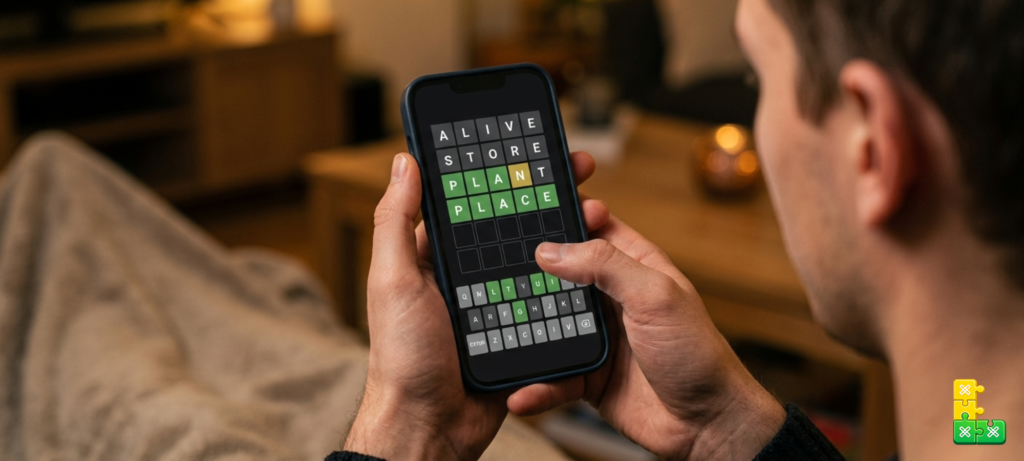

Every morning, a fresh hidden word appears in Letroso and stays active for exactly twenty-four hours. Players around the world are all working on the same word simultaneously. Some will crack it in three guesses. Some will need eleven. And a handful will visit a page exactly like this one looking for a nudge in the right direction.
This guide covers how the daily word works, how to approach it strategically on any given day, and how to use each session as a genuine learning opportunity rather than just another puzzle to tick off.
Table of Contents
- How the Letroso Daily Word Works
- What to Do Before Your First Guess
- Reading the Word Length Before You Type
- The Best First Words for Any Daily Puzzle
- Mid-Game Strategy — What to Do After Guess Two
- How to Use the Visual Clues Properly
- When to Check for Today’s Word Hints
- Learning From Each Daily Word
- Frequently Asked Questions
How the Letroso Daily Word Works
At midnight every day, Letroso selects a new hidden word and makes it the day’s puzzle. Every player who opens the game on that calendar day sees the same empty grid waiting for the same word. The previous day’s word is locked away permanently — you cannot go back and play it.
The word can be anywhere from three to eight letters long. Letroso does not fix the length the way most word games do. Some days you are working with a short, sharp three-letter word. Other days you are staring at eight empty boxes wondering where to begin. The length changes daily, and recognizing that it changes is the first step to approaching each puzzle without assumptions from the day before.
The puzzle stays live until midnight. Whatever time you start, you have until midnight to complete it. If you do not complete it before the reset, your streak resets to zero and that word is gone.
What to Do Before Your First Guess
The biggest mistake most players make is typing their first guess before looking at the board. This costs them information they already had before they spent a guess.
Before typing anything, look at the grid. Count the boxes. How many letters does today’s word have? Five letters requires a different approach than eight letters. A three-letter puzzle has a tiny word pool that you can narrow down quickly with a single good guess. An eight-letter puzzle has a huge pool and benefits from a longer, coverage-focused opener.
Also check the game mode. Make sure you are in the Daily tab, not Unlimited. They look the same but track separately. If you accidentally solve an unlimited puzzle thinking it was the daily, your streak is unaffected — but you have also used up some mental energy without making progress on what counts.
Reading the Word Length Before You Type
Word length is the most underused piece of free information Letroso gives you. The number of empty boxes on screen tells you the exact length of today’s hidden word before you have guessed a single letter. Use it.
A five-letter word means you want an opener that covers A, R, I, S, E or similar high-frequency combinations. ARISE is the most commonly recommended opener for five-letter puzzles because it hits three vowels and two of the top-frequency consonants in a single guess.
A six-letter word shifts the calculation. STRAIN covers six distinct letters — S, T, R, A, I, N — and tests high-frequency consonants alongside two common vowels. PLANET does the same with different letter coverage and pairs well with STRAIN if the first guess returns mostly grey.
For seven and eight-letter words, the opener needs to cover even more ground. PAINTER and CENTRAL both offer seven distinct high-frequency letters. RELATION and PERSONAL are strong eight-letter openers that avoid repeated letters while hitting common vowel and consonant combinations.
The key principle is always the same: choose an opener based on the word length you see in the grid, not the word length you used yesterday. For a complete breakdown of openers by word length, the best starting words guide has the full list with explanations.
The Best First Words for Any Daily Puzzle
Regardless of word length, a good Letroso opener shares three qualities. It contains no repeated letters, which means every position contributes unique information. It prioritizes high-frequency letters, which means the chances of getting useful green or yellow feedback are maximized. And it covers a mix of vowels and consonants rather than clustering all vowels or all consonants together.
For five-letter puzzles specifically, these openers consistently perform well:
ARISE tests A, R, I, S, E — three vowels and two top-frequency consonants. STARE tests S, T, A, R, E — two vowels and three consonants including the very common ST opening. CRANE tests C, R, A, N, E — useful for days when the F or C series is running.
The important thing is to pick one opener and use it consistently. Switching openers every day prevents you from building an intuitive baseline for what you typically know after guess one. Consistency makes the second and third guesses significantly faster over time.
Mid-Game Strategy — What to Do After Guess Two
After two guesses, you typically have enough information to shift from exploration to deduction. The mid-game is where most players lose efficiency — they keep making exploratory guesses when they should be narrowing down candidates systematically.
After guess two, do three things before typing anything. First, identify every confirmed letter — green tiles are locked, yellow tiles are confirmed present. Second, identify every eliminated letter — grey tiles are completely out. Third, look at the connection lines between tiles and identify any pairs that are confirmed as adjacent in the final word.
Now generate candidates mentally. Given everything you know, what words could still be the answer? If that list has more than five or six items, make a guess that eliminates the maximum number of them. If that list has two or three items, you can guess them directly in sequence.
The mid-game is also when the Letroso hints becomes most useful if you are genuinely stuck. A single category hint — “this is a noun related to weather” — can eliminate the majority of your remaining candidates without spoiling the answer.
How to Use the Visual Clues Properly
Most players use color feedback and ignore everything else. This leaves a significant amount of information on the table every single session.
Green tiles confirm both the letter and its exact position. That slot is fully resolved.
Yellow tiles confirm the letter but not its position. Critically, they also eliminate one specific position for that letter — the position where you placed it in that guess. Both pieces of information are equally important.
Grey tiles eliminate the letter entirely from all remaining guesses. Every grey tile is a letter you never need to consider again.
Connection lines appear between adjacent tiles after a guess is revealed. A connection line means those two letters sit directly next to each other in the final word. This is information that no other word game in this genre provides. A single connection line can eliminate the majority of remaining candidates because it tells you about letter order and proximity, not just letter presence.
Tile border states indicate when a letter has been confirmed in its final position. The visual appearance of the tile changes to show this, which means you can see at a glance which positions are resolved without mentally tracking them across multiple guesses.
For everything else about the visual system, the How to Play Letroso guide covers each element in plain language.
When to Check for Today’s Word Hints
External hints are most valuable after you have genuinely engaged with the puzzle but run into a wall. The right time to check is after at least three or four real attempts, when you have confirmed several letters but cannot assemble them into the correct word.
Checking hints before you play removes the entire satisfaction of the session. Checking hints after one guess shortcuts the problem-solving process before it has had time to work. Checking hints after four or five genuine attempts — when you are stuck but invested — gives you just enough to get unstuck without handing you the answer.
The Letroso Answer Todayuses a layered hint system for exactly this reason. The first hint tells you the word length, which you already know from the grid. Each subsequent hint adds one more piece of information. You can stop at any point and go back to the game with what you have learned.
Learning From Each Daily Word
The most underrated habit in Letroso is the thirty-second review after each session. When you solve the puzzle — or when you check the answer after giving up — spend half a minute asking yourself one question: which clue should have told me the answer earlier?
Was there a connection line you missed? A yellow tile you placed wrong twice in a row? An uncommon word ending like LT or CK that you did not test because it was not on your mental shortlist?
Identifying the specific clue you missed is more useful than any amount of additional gameplay, because it directly addresses the gap in your pattern recognition. You are not going to miss the same AU vowel pair twice once FAULT has taught you that AU belongs together. You are not going to forget to test the CK ending twice once CRACK has shown you it was sitting there all along.
This is why consistent daily play builds skill in a way that sporadic play does not. Each daily word is a lesson. The players who learn the lesson are the ones whose streaks keep growing. For the cognitive science behind this learning mechanism, Harvard Health Publishing has a readable summary of how puzzle-based pattern recognition develops over time.
Frequently Asked Questions
Is today’s Letroso word the same for everyone?
Yes. Every player worldwide gets the same hidden word on the same calendar day. This shared experience is what makes the daily format worth discussing — you and a friend in a different country are working on exactly the same puzzle at the same time.
What time does the Letroso word change?
Midnight, local time. The current day’s word locks and a new one becomes available.
How long is today’s Letroso word?
It changes every day. It can be anywhere from three to eight letters. The empty grid shows you the exact count before you start.
What if I cannot figure out today’s word?
Try the layered hints at the answer page — they give you word length, starting letter, vowel count, and category clues without requiring you to see the full answer. Use the in-game Hint power-up to reveal a confirmed letter if you are very close but stuck on one position.
Can I see what yesterday’s Letroso word was?
Yes. The answer archive on the hints page keeps a record of recent daily words. You can also check word game tracking sites that log daily answers across multiple games.
Does it matter what time of day I play?
Not for your score or streak, but morning play is generally recommended because it guarantees you finish well before the midnight reset and removes any risk of losing your streak due to a late-evening session running out of time.